
Saddle Fitting
One of the most common reasons for a cyclist coming for a bike fit is because of saddle discomfort.
 Saddle sores, chafing, sit bone aches and numbness can all affect our ability to perform and our enjoyment of cycling. If left unresolved these problems can go on to cause health issues with potentially serious consequences.
A common statement I hear from riders visiting the studio is that they bought their saddle because their mate recommended it, or it had a good review. This is where the cycling press let themselves down. A comment to say that the reviewer found a saddle good or bad for them isn’t useful to another cyclist. Realistically the best way to find a saddle that works for you is to try it once you have had a bike fit. In my opinion, a journalist reviewing a saddle should state how well made the saddle is, how much does it weigh, how much it costs, what options and accessories there are for it and how many different widths it comes in.
Why should their negative experience of comfort influence the sales of that saddle model to potential customers that it would suit better? If we were all the same, why would some of us suffer discomfort and why are there thousands of saddles on the market?
Improve Seated Comfort
Often people will come in just looking for a new saddle to improve their seated comfort. However, saddle comfort is not just a factor of the saddle. Its position in terms of both height and fore and aft placement, its relationship to the handlebars and their position, can prevent a potentially comfortable saddle from feeling great. Also as important is our connection to the pedal.
The shoes that we use, our insoles, leg length shims and wedges, all play a part in saddle comfort. For myself when I have two heel wedges in my left shoe, my saddle turns from a hard brick into a comfortable sofa. Whilst I’m happy to help advise on saddle choice, sometimes in the long run it’s better to start with the bike fit and see what difference that makes to saddle comfort first, after all its cheaper if the current saddle can be made to feel comfortable.
Finding The Right Saddle – Saddle Fitting
 I have several items of equipment in the studio that can help with saddle comfort. A good start to finding the right saddle is to use the bike fitting.com saddle selector. The saddle selector is a cube the cyclist can sit on that measures their effective sit bone width digitally giving greater accuracy than other gel pad based systems or the ‘corrugated cardboard on the stairs’ home measurement technique. The output is a digital reading in millimetres that can then be used with the bike fitting.com database that has over 1000 saddles from over 40 different brands. This can effectively reduce the number of saddles to a more usable list to help find potentially viable saddles.
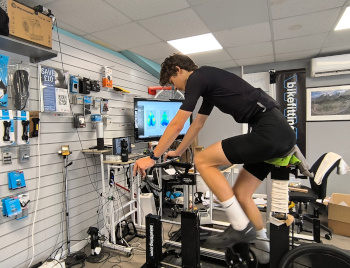
Also, within the studio I have the latest saddle pressure mapping technology from Velometrik. A thin cover with over 400 sensors can be laid on top of the saddle which the cyclist can then sit on. This provides us with a heat map visualisation of pressure distribution indicating how the cyclist is connecting with the saddle. The sensor can provide data indicating how evenly pressure is distributed, whether it is to the left, right, forward or back, if the pelvis sits symmetrically and how much rocking is occurring. This pressure sensor coupled with the fast saddle quick release of the bikefitting.com jig can enable us to rapidly compare different saddles and gain insights into their relative merits.
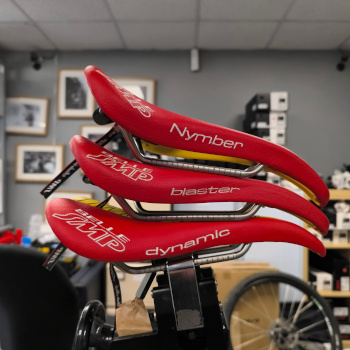
As noted above there isn’t one saddle that works well for everyone. With that in mind I have demo saddles that we can try out in the studio and can then be loaned out to the cyclist for longer term testing. I hold demo saddles from popular brands such as Selle SMP, Fizik, ISM, and Pro.